


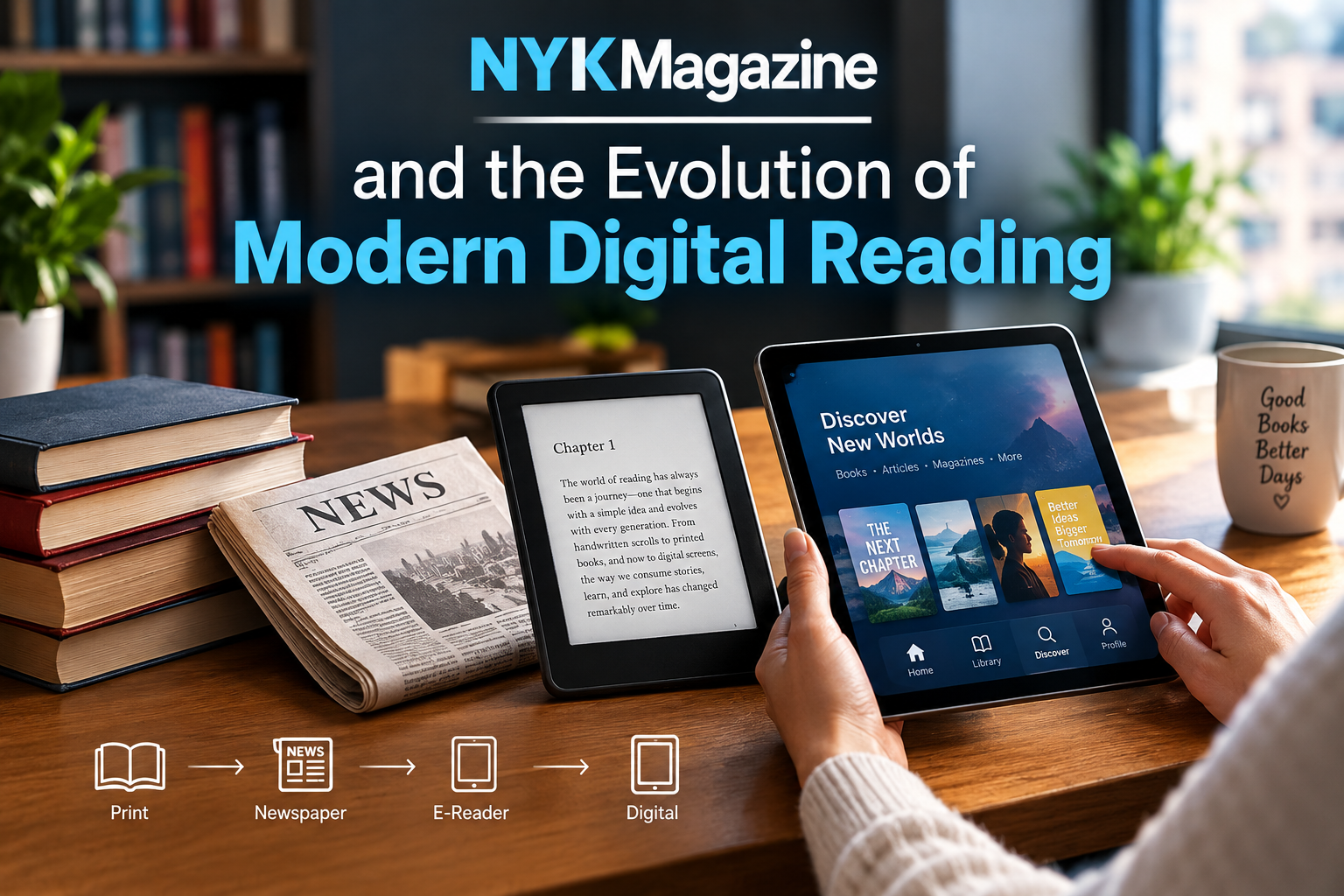
The way people consume information has changed dramatically over the last two decades. Printed newspapers and traditional magazines remain important, but digital publishing has become a major part of everyday life. Readers now expect information to be accessible, well organized, easy to understand, and available across different devices. This transformation has created a new generation of online publications designed to bring multiple subjects together in one convenient place.
nykmagazine represents the broader idea of a modern digital magazine built around accessible, informative, and varied content. Instead of limiting readers to one subject, a contemporary magazine can explore technology, business, entertainment, lifestyle, travel, health, and other areas that influence everyday life. This wider approach allows readers to discover useful information without relying on a single traditional category.
What Is NYKMagazine?
NYKMagazine can be understood as a modern digital publishing concept focused on delivering articles across a variety of subjects. The term combines the identity of a magazine with the flexibility of online publishing, where new articles can be created, updated, and accessed much more quickly than traditional print publications.
Unlike a printed magazine, a digital publication does not have to follow a fixed number of pages. https://nykmagazine.co.uk/ can continuously expand its content library and organize information into categories. Readers can search for a particular topic, discover related stories, or explore subjects that they may not have considered before.
This flexibility is one of the defining characteristics of modern online magazines. Readers are no longer dependent on a monthly publication schedule. Instead, fresh information can become available throughout the week, allowing digital publications to respond to changing interests and emerging topics.
Why Digital Magazines Have Become So Popular
The growth of smartphones, tablets, laptops, and affordable internet access has changed reading habits. People increasingly search for information while commuting, working, studying, shopping, or relaxing at home.
A digital magazine can respond to these habits by presenting content in a format that works across different screen sizes. Articles can be read on a desktop computer in the morning, revisited on a smartphone during the day, and shared with friends or colleagues through digital platforms.
Convenience is another important factor. A reader interested in business does not necessarily want to visit one website for business stories, another for technology, and another for lifestyle information. A broad publication can bring different subjects together and create a more convenient reading experience.
This does not mean every article has to appeal to every reader. Instead, different categories can serve different interests while remaining part of the same publication.
The Importance of Informative Content
Modern readers have access to an enormous amount of information. A simple search can produce thousands of results, but quantity does not automatically mean quality.
For a digital magazine to remain useful, its articles should provide genuine information rather than simply repeating common statements. Good content explains a subject clearly, provides useful context, and helps readers understand why the topic matters.
Informative writing also needs structure. Long paragraphs without clear organization can make even an interesting subject difficult to follow. Headings, short paragraphs, tables where appropriate, and logical transitions can make an article easier to read.
The objective should be simple: give readers enough useful information to understand the topic without making the article unnecessarily complicated.
Technology and the Changing Information Landscape
Technology is one of the most rapidly changing areas of modern life. Artificial intelligence, quantum computing, mobile devices, cybersecurity, software, cloud services, and digital platforms continue to influence businesses and consumers.
A technology-focused article therefore needs to do more than describe a new product or trend. Readers often want to know how a technology works, why it matters, where it can be used, and what limitations should be considered.
For example, artificial intelligence has moved from a specialist research subject into everyday applications. People now encounter AI through search engines, productivity tools, customer service systems, creative software, smartphones, and business applications.
Digital magazines can help make these complicated subjects easier to understand by presenting technical developments in accessible language.
Business Content for Everyday Readers

Business information is another important part of modern digital publishing. Business topics are no longer relevant only to executives or financial professionals. Entrepreneurs, freelancers, employees, students, and consumers all encounter business decisions in their daily lives.
Articles can explore subjects such as entrepreneurship, online businesses, marketing, workplace trends, digital commerce, customer service, and changing consumer behavior.
Useful business writing should avoid unnecessary jargon whenever possible. A reader should be able to understand the main idea without needing an advanced background in economics or corporate management.
Clear explanations are particularly valuable when discussing complex subjects such as digital marketing, online platforms, changing industries, or emerging business models.
Entertainment and Popular Culture

Entertainment remains one of the most widely consumed forms of online content. Movies, television, music, celebrities, streaming platforms, and popular culture generate constant public interest.
However, entertainment articles can be more valuable when they provide context rather than simply repeating headlines. A biography, for example, can explain a person’s career development, professional achievements, background, and notable work.
Similarly, an article about a musician can examine their career, major releases, public milestones, and influence on popular culture.
The most useful entertainment content balances readability with factual accuracy. Readers want engaging stories, but they also benefit from information that distinguishes confirmed facts from speculation, https://nykmagazine.co.uk/.
Lifestyle Topics and Everyday Interests
Lifestyle publishing covers an exceptionally broad range of subjects. It can include personal interests, shopping habits, travel, fitness, food, hobbies, home-related topics, and everyday decision-making.
The strength of lifestyle content often comes from its practical nature. Readers may search for information because they want to make a decision or learn something useful.
For example, someone researching running shoes may want to understand differences between cushioning systems, shoe construction, durability, and intended use. A traveler may want to learn about a destination before planning a trip. Someone interested in personal technology may want to compare features before purchasing a device.
This type of content works best when it answers real questions rather than simply filling space with keywords.
Travel Information in the Digital Era

Travel research has also moved strongly toward digital platforms. Before visiting a destination, people often research attractions, transportation, accommodation, local customs, weather, food, and activities online.
A useful travel article should therefore provide practical information while maintaining realistic expectations. Destinations can change, attractions may have seasonal schedules, and prices can vary.
Travel writing also benefits from context. Instead of listing attractions without explanation, an article can describe what makes a location interesting, who might enjoy visiting it, and what travelers should consider before making plans.
Digital magazines can make travel research easier by bringing destination information together with broader lifestyle and cultural content.
Health Information Requires Responsibility
Health is another subject that attracts substantial online interest, but it requires a more careful approach than many other categories.
Readers frequently search for information about exercise, nutrition, wellness, sleep, and general health. However, online articles should not replace professional medical advice or present uncertain claims as established facts.
Responsible health writing should use reliable sources, avoid exaggerated promises, and clearly distinguish general educational information from individual medical guidance.
The goal is to help readers understand a topic without encouraging them to make important medical decisions based solely on an online article.
The Role of SEO in Digital Publishing

Search engine optimization has become an important part of online publishing because it helps readers discover useful content through search engines.
Effective SEO is not simply about repeating a keyword dozens of times. Modern articles need to satisfy search intent, provide useful information, maintain readable language, and organize content logically.
A primary keyword such as nykmagazine should therefore appear naturally rather than being forced into every paragraph. Related terminology can help search engines and readers understand the broader subject of an article.
Important SEO elements include a descriptive title, a useful meta description, logical headings, readable paragraphs, relevant internal links, and content that genuinely addresses the reader’s question.
Keyword placement should always support readability. If a phrase sounds unnatural, excessive repetition can reduce the quality of the article instead of improving it.
Why Readability Matters
An article can contain accurate information and still fail to engage readers if it is difficult to read.
Modern audiences often scan content before deciding whether to read it completely. Clear headings, concise paragraphs, straightforward language, and useful formatting help readers find the information they need.
Grammar also plays an important role. Spelling mistakes, awkward sentences, inconsistent punctuation, and unclear wording can reduce credibility.
Professional digital publishing therefore requires more than simply producing a large number of words. The content needs to communicate ideas clearly and efficiently.
The Value of Original Perspectives
The internet contains enormous amounts of duplicated information. Many websites publish articles based on the same sources and explain topics using almost identical language.
Originality does not necessarily mean discovering a completely unknown subject. It can mean presenting familiar information from a clearer angle, adding useful context, organizing facts differently, or answering questions that other articles overlook.
For digital magazines, originality can help create a recognizable editorial identity. Readers are more likely to return when they consistently find content that is useful, understandable, and presented in a distinctive way.
How Readers Can Evaluate Online Articles
Readers should also take responsibility for evaluating digital information. Not every article published online has the same level of reliability.
Before accepting an important claim, readers can consider several questions:
- Is the information supported by credible sources?
- Does the article distinguish facts from opinions?
- Is the information current enough for the subject?
- Does the writer provide useful context?
- Are claims presented without unnecessary exaggeration?
- Does the article acknowledge uncertainty where appropriate?
These questions are particularly important for health, finance, technology, and other subjects where outdated or inaccurate information can create confusion.
The Future of Digital Magazines

Digital publishing is likely to continue evolving as technology changes. Artificial intelligence, personalized recommendations, interactive media, voice search, mobile-first design, and new forms of digital storytelling are already influencing how people discover and consume information.
At the same time, the basic purpose of a magazine remains relatively simple: connect readers with information that interests them.
Technology can change the format, but useful journalism and informative writing still depend on clarity, accuracy, relevance, and trust.
Future digital magazines may become increasingly personalized, allowing readers to follow specific subjects while discovering related topics automatically. Articles may also become more interactive, combining text with videos, graphics, data visualizations, and other forms of media.
Final Thoughts
nykmagazine reflects the broader evolution of digital magazines from fixed print publications into flexible online information platforms. Modern readers can explore technology, business, entertainment, lifestyle, travel, health, and many other subjects from a single digital environment.
The most valuable digital publishing does not depend only on publishing frequently. It depends on producing information that readers can understand, use, and trust.
As online reading habits continue to evolve, publications that focus on clear writing, meaningful information, responsible reporting, and strong reader experience can remain relevant in an increasingly crowded digital environment.
The future of magazines may be digital, but the fundamental value of good content remains the same: give people information worth reading. https://nykmagazine.co.uk/
