


Brooks Running Shoes have become a well-known name in the performance running industry, but the company did not start as a running-shoe specialist. Brooks began more than a century ago and gradually moved from making ballet and bathing shoes to developing footwear for baseball, skating, and eventually running. Today, Brooks is focused heavily on the running experience, with shoes designed for road running, trail running, daily training, racing, walking, and different support needs.
If you are searching for Brooks Running Shoes, this guide explains the brand’s history, major technologies, popular shoe families, cushioning systems, stability features, and what makes different Brooks models different from one another.
What Are Brooks Running Shoes?
Brooks Running Shoes are performance-focused athletic shoes developed by Brooks Running for runners and other active users. The brand offers different types of footwear rather than producing one shoe for every runner.
Depending on the model, Brooks shoes can emphasize:
- Soft cushioning
- Everyday comfort
- Stability and support
- Lightweight responsiveness
- Long-distance running
- Speed and racing
- Trail protection
- Walking and everyday activity
Brooks also develops different cushioning and support technologies for specific running experiences. Its current technology portfolio includes DNA LOFT, DNA FLASH, GuideRails, Segmented Crash Pad, GlideRoll Rocker, and trail-oriented technologies.
This variety is important because runners do not all have the same preferences. One person may want a soft and highly cushioned shoe, while another may prefer a lighter and more responsive ride.
The History of Brooks Running Shoes

The story of Brooks began in 1914 in Philadelphia. According to Brooks’ official history, the company originally operated from a small factory making ballet slippers and bathing shoes. At that stage, Brooks was not yet the running-focused company people recognize today.
1921: Brooks Enters Baseball

In 1921, Brooks expanded into mainstream sports by developing baseball cleats. The company’s historical account notes that Brooks cleats were later worn by championship teams and athletes including Mickey Mantle.
The move demonstrated that Brooks was interested in specialized athletic footwear long before the modern running-shoe market developed.
1929: Roller Skates

Brooks later moved into roller skates. This was another stage in the company’s development as a sports-footwear manufacturer.
1970s: The Running Boom
The 1970s became a major turning point for Brooks.
The running boom in the United States helped create a growing market for dedicated running shoes. Brooks identifies 1972 as an important moment in its history because Frank Shorter’s Olympic marathon victory helped fuel interest in running in the United States.
In 1974, Brooks developed the Villanova with feedback from Olympic middle-distance runner Marty Liquori. The company also introduced the Vantage, which became the first Brooks shoe to reach number one in Runner’s World, according to Brooks’ historical record.
1990s: Major Running Technologies

Brooks continued developing specialized running technology throughout the 1990s.
The Beast, introduced in 1992, became an important model in Brooks’ history of motion-control footwear. The company also introduced Podular Technology in 1995, which was designed to make the outsole more flexible.
Then came one of the brand’s most recognizable shoes.
1999: Adrenaline GTS

The first Adrenaline GTS arrived in 1999. Brooks describes it as an important move into the stability category. The shoe was designed to provide support while also allowing flexibility and smoother transitions from heel strike to toe-off.
The Adrenaline GTS eventually became one of Brooks’ best-known running shoe families.
2001: Brooks Focuses on Running
A major strategic change happened in 2001.
Brooks describes this period as its “full commitment to the run.” Instead of spreading its attention across many types of sporting goods, the company focused on running. That focus continues to influence Brooks’ product development today.
Brooks Running Shoes Today
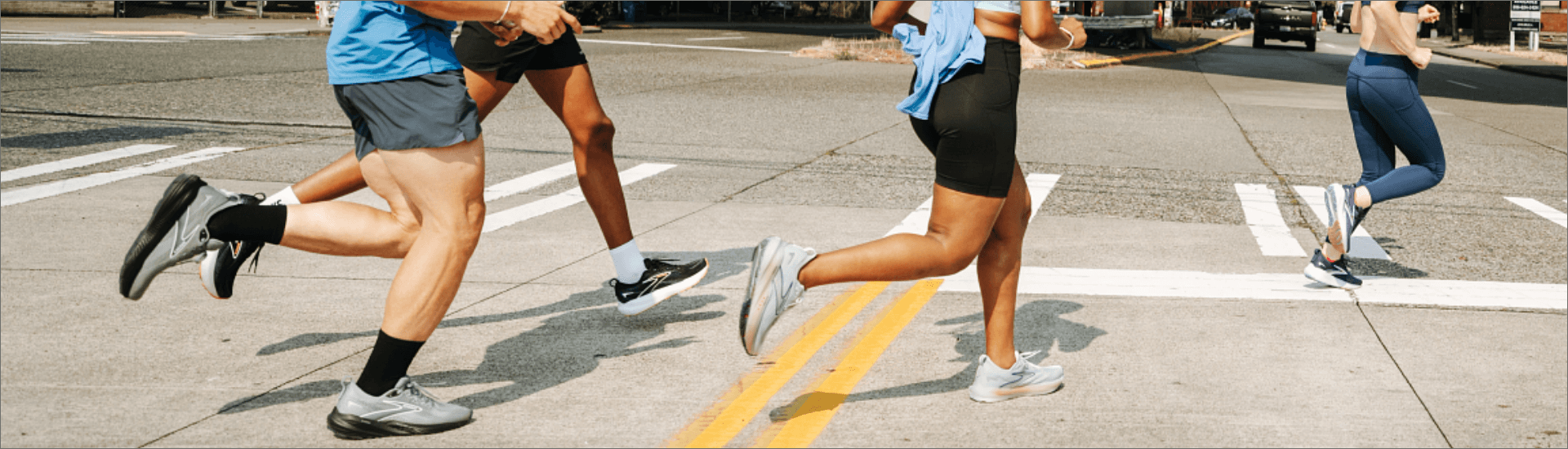
Brooks is now headquartered in Seattle and operates internationally. The company sells performance footwear, apparel, sports bras, and accessories in more than 50 countries, according to its 2024 supply-chain transparency statement. Brooks is a subsidiary of Berkshire Hathaway.
The company continues to position running as its central area of specialization.
In February 2026, Brooks reported that it had finished 2025 with record global revenue, including a 16% year-over-year increase, and said 2025 represented its ninth consecutive year of growth. These figures are company-reported results.
Major Brooks Running Shoe Technologies
One of the biggest reasons Brooks Running Shoes receive attention is the technology used in their midsoles, support systems, and outsoles.
1. DNA LOFT Cushioning
DNA LOFT is one of Brooks’ major cushioning technologies.
Brooks describes DNA LOFT as a soft cushioning system made using a combination of foam, rubber, and air. Later versions introduced additional improvements, including DNA LOFT v2 and DNA LOFT v3.
DNA LOFT v3 uses nitrogen infusion and a supercritical foaming process. Brooks says this approach is designed to make the cushioning softer, lighter, and more responsive while maintaining durability.
This technology appears in several well-known Brooks models.
2. DNA FLASH
DNA FLASH is another cushioning technology in the Brooks lineup. Brooks describes its modern cushioning technologies, including DNA LOFT and DNA FLASH, as nitrogen-infused systems designed to provide a lightweight running experience.
DNA FLASH is generally associated with a more responsive running feel compared with the softer character associated with some DNA LOFT shoes.
3. GuideRails Support
GuideRails is Brooks’ approach to support.
Rather than relying only on traditional motion-control concepts, Brooks says GuideRails are intended to help keep excess movement in check while allowing the runner’s natural motion path.
This technology is particularly associated with models such as the Adrenaline GTS and Glycerin GTS.
4. Segmented Crash Pad
Brooks also uses Segmented Crash Pad technology in selected road-running shoes.
The system is designed to help provide smoother transitions and a comfortable ride. It works together with the rest of the shoe’s cushioning and geometry rather than functioning as a standalone feature.
5. GlideRoll Rocker
GlideRoll Rocker is another design feature used in selected Brooks road shoes.
Its purpose is to help create a smoother transition through the running stride. Brooks includes GlideRoll Rocker among the technologies used to create a smoother road-running experience.
6. Trail Technologies
Brooks also produces trail-running footwear.
Depending on the model, trail shoes can include features such as a Ballistic Rock Shield, Trail Adapt System, and TrailTack Green rubber. Brooks says TrailTack Green rubber contains 25% recycled content and is designed to provide traction on wet and dry surfaces.
Popular Brooks Running Shoe Families
Brooks has developed several recognizable shoe families. Each one is aimed at a somewhat different type of runner or running experience.
| Brooks Shoe Family | Main Character | Typical Use | Key Technology or Feature |
|---|---|---|---|
| Ghost | Balanced daily cushioning | Everyday road running and walking | DNA LOFT cushioning |
| Glycerin | Plush cushioning | Comfortable daily and long-distance runs | DNA LOFT v3 |
| Adrenaline GTS | Supportive daily trainer | Runners wanting added support | GuideRails + DNA LOFT |
| Glycerin GTS | Plush support | Cushioned runs with support | DNA LOFT v3 + GuideRails |
| Beast | Maximum support heritage | Runners seeking strong motion-control characteristics | Support-focused design |
| Cascadia | Trail-oriented | Trail running and mixed terrain | Trail cushioning and protection |
| Caldera | Cushioned trail running | Longer trail outings | DNA LOFT v3 |
| Hyperion | Speed-focused | Faster training and racing | Lightweight performance design |
Exact specifications can vary by generation, so runners should check the specifications for the particular model year they are considering.
Brooks Ghost
The Ghost is one of Brooks’ best-known running shoe families.
Brooks describes the Ghost as one of its popular running shoes and says current versions use 100% DNA LOFT cushioning.
The Ghost is generally positioned as a versatile road-running shoe. It can appeal to runners who want a straightforward daily trainer rather than a highly specialized racing shoe.
Because different generations can change the upper, midsole, outsole, weight, and fit, it is important to check the exact Ghost version before buying.
Brooks Glycerin
The Glycerin sits toward the plush-cushioning side of the Brooks range.
Brooks describes the Glycerin as its super-soft shoe and says it uses 100% DNA LOFT v3 cushioning in current versions referenced by the company.
The Glycerin can be attractive to runners who prioritize a softer feel during daily miles, long runs, or walking.
The Glycerin family also includes the Glycerin GTS, which combines the cushioning approach with GuideRails support.
Brooks Adrenaline GTS
The Adrenaline GTS is one of the most recognizable stability shoes in the Brooks lineup.
Its history goes back to 1999, when Brooks introduced the original Adrenaline GTS as part of its move into the stability category.
Modern Adrenaline GTS models use GuideRails technology and DNA LOFT cushioning. Brooks says GuideRails are designed to limit excess movement while allowing the body to follow its natural motion path.
For runners comparing the Ghost and Adrenaline GTS, the main distinction is support: the Ghost is positioned as a neutral-style cushioned shoe, while the Adrenaline GTS adds GuideRails support.
Brooks Glycerin GTS
The Glycerin GTS combines the plush cushioning approach of the Glycerin family with GuideRails support.
Brooks describes it as a super-soft support shoe with 100% DNA LOFT v3 cushioning, a plush interior liner, a soft heel collar, and GuideRails technology.
This makes the model particularly relevant for runners who want a soft ride but also prefer a supportive shoe design.
Brooks Trail Running Shoes
Brooks does not only make road shoes.
Its trail range includes models such as the Cascadia and Caldera.
The Cascadia is designed for trail use and uses trail-oriented cushioning and stability technology. The Caldera is another trail option featuring DNA LOFT v3 cushioning in current versions described by Brooks.
Trail shoes differ from ordinary road-running shoes because they need to deal with rocks, roots, loose surfaces, mud, and uneven terrain. As a result, protection and outsole traction become especially important.
Brooks Running Shoes for Walking
Brooks shoes are not limited to running.
Many people also use running shoes for walking, standing, travel, and everyday activity because running footwear can provide cushioning and a supportive construction.
However, the best Brooks model for walking depends on the person’s preferred cushioning level, fit, foot shape, and support requirements.
A soft shoe is not automatically the right choice for every person. Comfort is highly individual, so trying on different models can be useful.
How to Choose the Right Brooks Running Shoes
Choosing Brooks Running Shoes should start with your actual activity.
For Everyday Road Running
A daily trainer such as the Ghost family may be suitable for runners looking for a versatile road shoe.
For Soft Cushioning
The Glycerin family is designed around a plush cushioning experience and can be considered by runners who prefer a softer ride.
For Added Support
The Adrenaline GTS and Glycerin GTS are options for runners who want Brooks’ GuideRails support system.
For Trail Running
Cascadia and Caldera are examples of Brooks shoes designed for trail environments.
For Faster Running
Performance-focused Brooks models use different combinations of lightweight construction, responsive cushioning, and racing-oriented geometry. The exact choice depends heavily on the distance and type of training.
Brooks Running Shoes and Fit
Fit is one of the most important parts of choosing running footwear.
A shoe can have excellent cushioning technology and still feel uncomfortable if the size or shape does not match your foot.
When trying Brooks shoes, pay attention to:
- Heel security
- Toe-box space
- Midfoot comfort
- Width
- Arch-area feel
- Overall length
- Pressure points
- Whether your toes can move naturally
Brooks offers different widths in parts of its product range, which can be helpful for runners whose feet do not fit comfortably into a standard-width shoe.
It is also important to remember that one Brooks model may fit differently from another. A person who likes the fit of one model should not automatically assume every Brooks shoe will feel identical.
Are Brooks Running Shoes Good for Long Runs?
Brooks produces several shoes intended for comfortable daily and distance running, but the right choice depends on the runner.
Models with substantial cushioning can be useful for runners who prefer a softer feel during longer sessions. Performance-oriented models may prioritize responsiveness and weight.
Long-distance runners should consider the shoe’s cushioning, fit, weight, outsole durability, and how comfortable it remains after many miles.
Most importantly, runners should test their shoes during training before using a new pair for an important race.
Brooks Running Shoes and Durability
Durability depends on the individual model, running surface, runner’s weight, running style, mileage, and maintenance.
Road shoes generally experience different wear patterns from trail shoes. Asphalt, concrete, tracks, treadmills, dirt paths, and rocky trails can all affect outsole wear differently.
Instead of judging durability only by the brand name, check the construction of the specific model and monitor changes in cushioning, outsole wear, upper damage, and overall comfort.
Brooks’ Evolution in Running Technology
Brooks’ history shows how running-shoe technology has evolved.
The company moved from traditional athletic footwear into specialized running designs and eventually developed cushioning, stability, flexibility, and trail technologies.
The timeline includes several notable developments:
- 1914: Brooks begins making ballet and bathing shoes.
- 1921: Brooks develops baseball cleats.
- 1929: Brooks enters roller-skate footwear.
- 1974: The Villanova is developed with runner feedback.
- 1977: Vantage becomes the first Brooks shoe to reach number one in Runner’s World.
- 1992: The Beast becomes an important motion-control model.
- 1995: Podular Technology introduces a flexible outsole concept.
- 1999: The first Adrenaline GTS launches.
- 2001: Brooks commits its business focus to running.
- 2006: MoGo cushioning is introduced.
- 2007: Brooks introduces BioMoGo.
- 2017: DNA AMP launches.
- 2018: DNA LOFT and GuideRails 2.0 become major parts of the brand’s technology story.
Brooks Running Shoes: What Makes the Brand Different?
One of the defining characteristics of Brooks is its long-term focus on running.
The company has produced many types of athletic footwear throughout its history, but since 2001 it has concentrated its business around running.
This specialization has influenced the development of different shoe categories, including neutral road shoes, supportive road shoes, trail footwear, racing shoes, and cushioned daily trainers.
Another important feature is the company’s emphasis on studying human movement. Brooks says its product development involves biomechanics experts, product developers, and research teams.
Final Thoughts on Brooks Running Shoes
Brooks Running Shoes have a history that stretches back to 1914, but the brand’s modern identity is closely connected to its decision to focus on running in 2001.
Over the years, Brooks has developed a broad range of technologies and shoe families. DNA LOFT and DNA LOFT v3 are associated with softer cushioning, DNA FLASH focuses on lightweight responsiveness, while GuideRails provides a different approach to support. Trail models add protection and traction features for uneven terrain.
For someone searching for the right Brooks shoe, there is no single model that fits every runner. The best starting point is to identify your activity, preferred cushioning, support needs, running surface, foot shape, and desired fit.
Whether you are looking for a daily road shoe, a soft long-distance trainer, a supportive model, or a trail shoe, Brooks’ extensive lineup provides several categories to explore.
With more than a century of footwear history and a strong focus on running since 2001, Brooks Running Shoes remain an important part of the modern performance-running market. Read more.
